
When poems step beyond the comfort of familiar themes and inherited certainties, they create tremors that a sleeping society would rather not feel. Such tremors unsettle habits, disturb silences, and expose truths that are often buried beneath convenience and fear. Yet they are necessary, for they keep a few eyes open when the world chooses blindness, a few ears attentive when noise drowns out truth, a few mouths free to speak and taste what is real, and a few noses capable of sensing both the fragrance of hope and the stench of decay. Poetry that refuses comfort does not merely describe the world. It interprets it in many unimaginable ways. It enters the spaces where authority builds walls around memory and language, reminding us that what is suppressed does not disappear but waits patiently to be heard.
To write about what has deliberately been left unwritten is perhaps one of the most difficult acts a poet can undertake. It demands not only courage but also the endurance to remain faithful to uncomfortable realities without softening or reshaping them for acceptance. In a world governed by hypocrisy, where truth is often negotiated, edited, or disguised, such honesty becomes an act of resistance. These poems compel us to revisit the abandoned chambers of our own consciousness, places that have long remained sealed by inherited prejudices, social conventions, fear, or deliberate forgetting. They ask us to confront what we have learned to avoid, and in doing so, they reveal that silence is never empty. Rather, it is often filled with histories that were denied the right to speak.
These poems are important because they keep a collapsing society from dissolving entirely into dust. They preserve memory when institutions erase it, nurture hope when despair becomes ordinary, and transform private whispers into the collective cries of a restless conscience. They remind us that poetry is not merely an aesthetic exercise but a living archive of resistance, compassion, and human dignity. Even when such verses are read aloud, however, they often carry an unsettling incompleteness, not because they have failed, but because the world has yet to fully listen. The poets may have spoken with all the honesty they possess, but the poems continue to wait for their true readers, for the moment when they cease to be confined to books and gatherings and become part of the air we breathe.
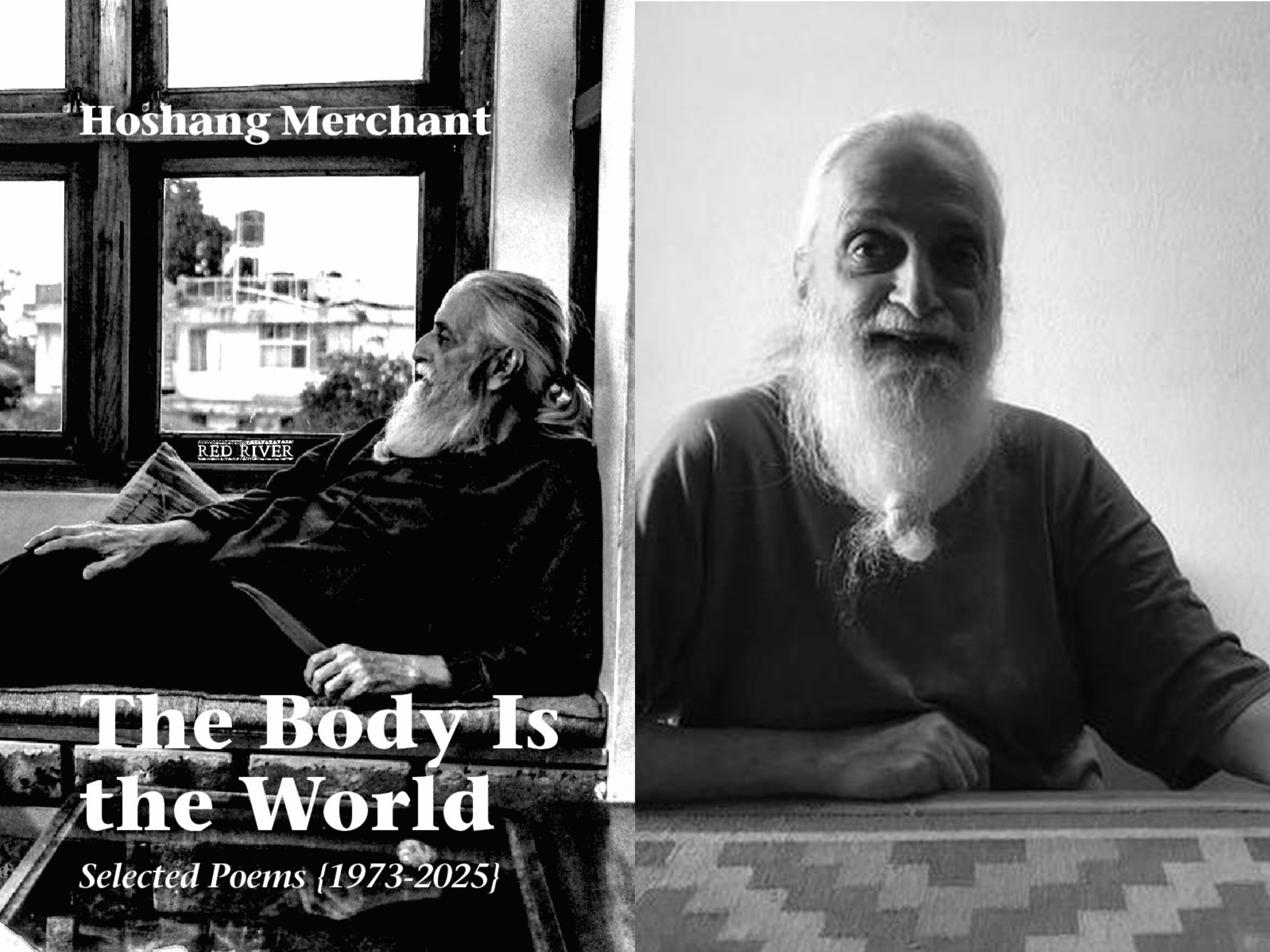
Perhaps the ultimate destiny of every enduring poem is to become as inevitable as the sky itself. Only then do its verses cease to belong to a small circle of devoted readers or dissenters and begin to belong to everyone who looks up at the horizon. Until that moment arrives, poems remain quiet witnesses to their time, restless and unfinished, patiently waiting for a society that can finally speak their language. The finest poetry is rarely confined to the page. It waits for history to catch up with it. Hoshang Merchant is one such poet, and arguably one of the most original voices in Indian poetry in English. For over five decades, he has written against literary conventions, moral certainties and social expectations, producing a body of work that continues to resist easy categorisation. His poetry refuses to separate the personal from the political, the erotic from the spiritual, or memory from history. Instead, it allows these worlds to flow into one another, creating a poetic language that is intimate, provocative and deeply philosophical.
His latest collection, The Body is the World: Selected Poems (1973–2025), brings together more than fifty years of poetic practice and reminds us why Merchant remains unlike any of his contemporaries. The collection is not merely a retrospective of an accomplished career. It is a record of a poetic consciousness that has consistently refused order, comfort and conformity. Reading these poems today, one is struck not only by their longevity but also by their startling freshness. They continue to sound contemporary because they were never written to satisfy the fashions of their time. Merchant's sensuality is never confined by language, nor is it limited to the body alone. Desire, in his poetry, becomes a way of thinking about memory, belongingness, identity, loneliness and all the major and minor fragile connections that make us human.
His audacity refuses to measure itself against the moral anxieties of society, choosing instead to confront those anxieties with remarkable honesty. He writes about sexuality, faith, love, death and belonging without seeking permission from social conventions or literary decorum. His poems inhabit those spaces that many writers hesitate to enter, not for the sake of provocation, but because they recognise that truth often resides in experiences we are taught to suppress. What makes Merchant's poetry especially distinctive is its refusal to remain within the limits of ordinary understanding. His imagination constantly moves beyond familiar categories, filling the silences we often leave untouched because confronting them would require confronting ourselves. His poems return us to those neglected regions of human experience where desire and grief, history and intimacy, exile and home, the sacred and the profane coexist without contradiction. They remind us that poetry is not merely an art of beautiful language but a way of recovering those truths that society repeatedly asks us to forget.
Oliver Laxe's Sirat has often been described as an existential road film, a journey through a fractured landscape where its protagonists move from the illusion of paradise towards the certainty of hell in search of someone they have lost. Yet the film offers something even more profound than a meditation on loss. It asks what remains of us once the search itself begins to dissolve. What happens when we finally arrive, only to discover that fulfilment does not rescue us from the conditions of being human? The characters are driven by longing. They continue their journey believing that finding the missing person will somehow restore a sense of wholeness. But Sirat gradually reveals that wholeness is never found in the object of our search alone. Every encounter with loss leaves another absence behind, and every destination opens into another uncertainty. The road therefore becomes less a path towards recovery than a confrontation with the fragile nature of existence itself.
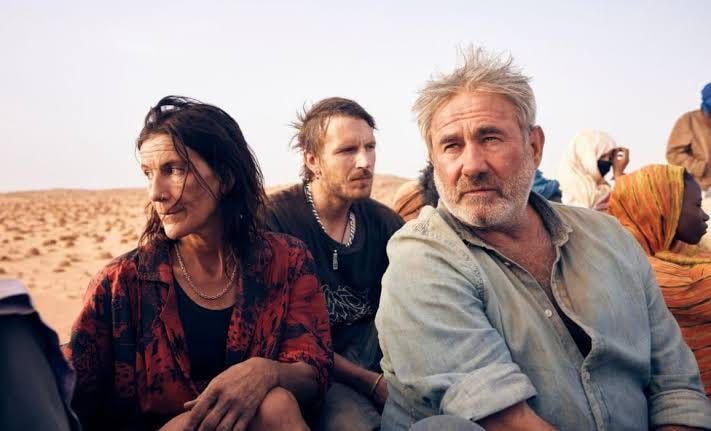
Death is central to this realisation. Here, death is not treated merely as a tragic interruption of life but as its silent companion. It exists alongside every step the characters take, reminding them that mortality is not an event waiting at the end of life but a possibility woven into every moment of living. The film neither romanticises nor sensationalises death. Instead, it presents it as something timeless and inevitable, a presence that quietly shapes every desire, every attachment and every journey. Perhaps this is the film's deepest philosophical insight. Human beings spend their lives searching for meaning, belonging, love or redemption, believing that these discoveries will finally complete them. Yet beneath every search lies another, less acknowledged search: our gradual movement towards the inevitable. We live knowing that death awaits us, even if we rarely allow ourselves to think about it. The paradox is that this inevitability does not diminish life. It gives life its urgency. Every choice, every relationship and every act of love acquire significance precisely because it exists within the limits of time. The search for meaning is therefore inseparable from the search for the inevitable, not because we long for death, but because the awareness of its certainty teaches us how to live.
In the poem Earth, Merchant is searching not only for his lover but also for himself. The beloved becomes one route towards self-discovery, yet the journey constantly expands beyond desire into questions of existence, identity and belonging. Merchant moves through the elements that constitute both the world and the human body, suggesting that the self is never complete in isolation but is continually shaped by memory, love, loss and nature. The earth, therefore, is not merely a landscape but an emotional and philosophical terrain through which the poet attempts to understand his own place in the world. The poem is suspended between permanence and transience. Merchant is equally drawn towards what appears eternal and what disappears almost as soon as it comes into being. The infinite promises continuity, while the fleeting reminds him of mortality. Neither allows him to rest. Yet he continues his search because searching itself becomes an existential necessity. The destination is less important than the movement towards it. The poem understands that human beings are not defined by what they finally possess but by what they continue to seek despite knowing that every fulfilment remains partial.
Merchant also responds to those who question his way of living, his desires and even his decision to continue carrying the burdens of love. He does not answer them through confrontation or moral certainty. Instead, he names the chaos that exists within him. The poem refuses easy explanations because the self it presents is fragmented, contradictory and constantly negotiating between opposing emotional states. Merchant recognises that uncertainty is not a weakness but an essential condition of being alive. At the heart of the poem lies the tension between love and indifference. Love becomes the force that continually calls the speaker towards another person, while indifference threatens to erode that movement. The poem is not simply about loving or not loving. It is about resisting the gradual emotional numbness that modern life often produces. Merchant seems aware that indifference can grow quietly, occupying spaces once filled by affection, intimacy and vulnerability. The poem therefore becomes an attempt to hold on to love even while acknowledging the persistent temptation to withdraw from it.
This conflict forms the emotional axis of the poem. Every image and reflection returns to the fragile balance between attachment and detachment, presence and absence, longing and resignation. Merchant's self-centredness is never presented as uncomplicated narcissism. Instead, it is repeatedly subjected to self-examination. He questions his own desires, his need for love and the ways in which the self continually seeks affirmation through another. His selfishness is not celebrated but interrogated, revealing a consciousness that is deeply aware of its own contradictions. The poem suggests that love alone makes such self-questioning possible. Only because another person matters does the speaker begin examining the limits of his own identity. Without love, selfishness loses its meaning because there is no relationship against which it can be measured. Indifference, by contrast, empties both love and selfishness of their emotional urgency. It produces a condition in which nothing truly demands our attention, and consequently nothing possesses the power to transform us.
Merchant's vision, therefore, moves towards a profound paradox. The self aspires to become everything, yet it can approach that fullness only by accepting its own incompleteness. Likewise, one becomes nothing only to discover another form of wholeness beyond the boundaries of the individual ego. The poem repeatedly moves between these two states, refusing to settle in either. Identity remains fluid, constantly dissolving and reforming through encounters with love, memory, the body and the earth itself. Merchant reminds us that the search for the beloved is inseparable from the search for the self. Neither can be completed once and for all. Love continually remakes identity, while identity continually reshapes the meaning of love. The poem's enduring power lies in its willingness to inhabit this uncertainty, suggesting that the human condition is not defined by certainty or arrival, but by the restless movement between everything and nothing, between intimacy and solitude, and between the desire to belong and the freedom to remain unfinished.
I set fire to hopes of harvest.
I forget about myself
my life a plaything. I forgot childish things.
Love has opened the door
to our poor earthen house
We are host and guest.
Mohsen Makhmalbaf's The Silence approaches music not simply as an art form or a collection of instruments, but as a way of inhabiting the world. Music exists in the rhythm of everyday life, in footsteps, voices, street noises and fleeting moments that most people overlook. It accompanies the protagonist wherever he goes, becoming both a refuge and a guide through an uncertain existence. Rather than treating music as something performed on a stage, Makhmalbaf reveals how it quietly shapes perception itself, allowing ordinary life to resonate with extraordinary meaning. Although the film unfolds against the backdrop of a politically and economically troubled Iran, it deliberately refuses to make history its only subject. Instead, it centres on a blind boy whose life revolves around tuning and delivering musical instruments. Through his encounters with sounds, melodies and people, he experiences love, labour, beauty, poverty, fear and the fragile continuity of everyday life. The external conflicts of society are never absent, but they are filtered through the sensory world of a child whose understanding of reality is governed less by sight than by listening.
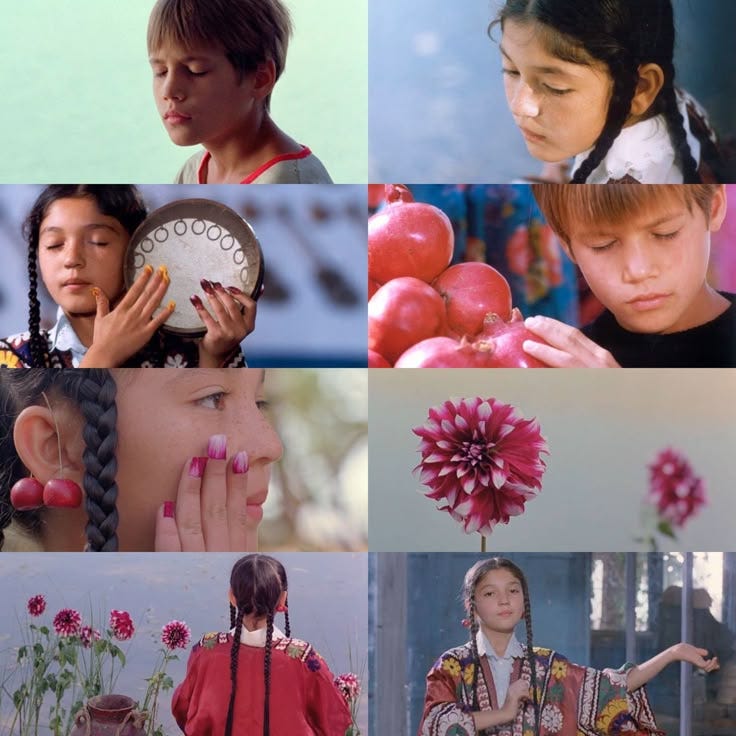
Music here, becomes a language through which the protagonist interprets life itself. Every sound carries an emotional memory, every melody opens another way of understanding the world, and every silence becomes as expressive as a piece of music. The boy's fascination with sound often places him in conflict with the practical demands of survival. Yet this conflict is precisely what gives the film its emotional depth. Makhmalbaf suggests that beauty is not detached from hardship. Instead, it persists within it, quietly resisting the brutality of circumstance. The film also meditates on the delicate relationship between life and death, presence and absence. These experiences are not presented as dramatic opposites but as states that continuously coexist. The protagonist encounters the world's suffering without fully surrendering to it because music continually offers another way of responding to reality. It does not erase pain, but it transforms the way pain is experienced. Music becomes a form of endurance, allowing life to retain its tenderness even when surrounded by uncertainty.
To embody an idea, for Makhmalbaf, is to refuse the separation of form and feeling. The body and the mind remain inseparable from the film's emotional core. The audience does not simply watch the protagonist listening to music; they are invited to inhabit his sensory world, where sound becomes touch, memory and imagination. Cinema itself begins to resemble music, unfolding through rhythm, repetition and silence rather than through conventional narrative progression. It is not merely about music but about the ways human beings create meaning through perception. Makhmalbaf reminds us that the world is not experienced only through what we see. It is equally shaped by what we hear, remember and feel. In doing so, he transforms music from an artistic practice into a philosophy of living, suggesting that even amidst deprivation and political turmoil, beauty survives in the smallest vibrations of everyday life.
In Poems for Vivan, Hoshang Merchant demonstrates that poetry often tells a story not by revealing everything but by withholding just enough. The poems unfold like fragments of memory, offering glimpses instead of complete narratives. Merchant trusts his readers to inhabit the silences between the lines, to connect the scattered images and complete the emotional landscape for themselves. What remains unsaid is as important as what is spoken. Meaning emerges not only from the verses but also from the spaces they deliberately leave open. The poet is not merely documenting the places he visits or the people he encounters. Those places and figures become points of departure for a deeper exploration of experience itself. Merchant is interested in those fleeting moments that transform ordinary life into poetry. The external world is continually absorbed into an interior landscape where memory, desire, grief and imagination coexist. Experience, rather than geography, becomes the true setting of the poems. It is through experience that the world acquires both its emotional weight and its poetic resonance.
There is also a playful defiance running through the collection. Merchant repeatedly approaches darkness without allowing it to dominate the poems. Death appears as a recurring presence, yet it is rarely granted absolute authority. Instead, the poet surrounds it with wit, irony and mischief, refusing to surrender to its finality. His naughtiness is not a decorative quality but a poetic strategy. It unsettles certainty and diminishes the power of fear, allowing humour and tenderness to exist even in the shadow of mortality. Because these poems are shaped by the poet's own consciousness, the dynamics of power inevitably shift in his favour. This is his narrative, his imagination and his language. He decides what to reveal, what to conceal and what to transform. Yet the poems never become private to the point of exclusion. Merchant begins with his own life, but his experiences gradually open themselves to universal emotions. The intensely personal becomes unexpectedly collective, allowing readers to recognise their own longings, anxieties and memories within his world.
The figure of the eco-friendly Pinto becomes an most intriguing image. It functions not merely as an object but as a chamber of curiosity from which multiple meanings emerge. It is at once familiar and enigmatic, comforting and unsettling. Like many of Merchant's symbols, it resists a single interpretation. Instead, it invites movement between certainty and doubt, encouraging both the poet and the reader to remain open to discovery. Curiosity, rather than certainty, becomes the force that drives the poem forward. This openness also shapes the collection's ethical vision. The poems do not seek refuge from the world. They engage with it in all its contradictions. Merchant's protest is neither muted nor selective. It does not speak only for one community, one ideology or one historical moment. It arises from a broader concern for human dignity and the persistent violence, prejudice and indifference that threaten it. His resistance is woven into the texture of the poems rather than announced through slogans, making it all the more enduring.
Bitterness steadily flows beneath the surface of the collection, but it never exists in isolation. Merchant recognises that the world is capable of immense cruelty as well as profound tenderness. Beauty and suffering, hope and despair, intimacy and estrangement remain inseparable from one another. The poems refuse to simplify this complexity. Instead, they insist that life must be experienced in its entirety, even when that experience is painful. The poem reminds us that poetry is not meant to resolve the contradictions of existence but to inhabit them. Merchant suggests that the world is both worthy and unworthy of our faith, generous and unforgiving, bitter and sweet. To live fully is to accept these contradictions without surrendering to cynicism or illusion. His poems leave us not with answers, but with a richer capacity to endure uncertainty, to remain curious and to discover meaning in the unfinished stories that make up our lives.
If I had to paint him
I’d paint a blob of drooling white
at his lap
and the mirrors can make
an endless quotation
in an empty colonnade.
Fareeda Mehta's Kali Salwar, adapted from Saadat Hasan Manto's celebrated short story, is not merely about the life of a sex worker or the economy of desire. It is about the slow erosion of desire itself. The film asks what happens when intimacy becomes labour, when affection turns into transaction, and when the body is repeatedly desired but rarely acknowledged as human. Mehta approaches these questions with remarkable restraint, refusing sensationalism and allowing the emotional solitude of her protagonist to unfold through ordinary gestures, silences and everyday disappointments. The protagonist is surrounded by men who seek her body, yet almost no one seeks her existence. She is wanted, but she is not needed. This distinction becomes the emotional centre of the film. Desire here, is fleeting and transactional, while the longing to be recognised, loved and remembered remains painfully unfulfilled. The body attracts attention, but the person inhabiting that body continues to experience profound loneliness. Mehta carefully exposes this contradiction, showing that physical proximity does not necessarily produce emotional intimacy.

Manto's story has always been deeply attentive to those lives that exist at the margins of society, and Mehta preserves that sensitivity. Neither of them approaches the sex worker through moral judgement or romantic idealisation. Instead, they reveal her as someone negotiating poverty, survival and the ordinary desire for dignity. Her profession does not erase her emotional life. On the contrary, it makes her yearning for companionship, tenderness and belonging even more visible. She continues to dream, to hope and to imagine another life, despite living within circumstances that repeatedly deny those possibilities. The changing city of Bombay also becomes an important presence in the film. It is a city constantly expanding, absorbing migrants, creating opportunities and simultaneously deepening alienation. People arrive in search of work, love or a future, only to discover that the city often reduces them to anonymous bodies struggling to survive. The protagonist's isolation is therefore inseparable from the urban landscape around her. Bombay promises reinvention, but it also produces invisibility, where countless lives continue unnoticed despite existing in the heart of a crowded metropolis.
Both Manto's story and Mehta's adaptation transform seemingly insignificant objects and desires into powerful emotional symbols. A simple black salwar is never merely an item of clothing. It becomes a marker of aspiration, self-respect, femininity and longing. The smallest absence can expose the deepest vulnerability. What appears trivial from the outside gradually reveals the emotional architecture of an entire life. Mehta understands that human beings rarely collapse because of one grand tragedy. More often, they are shaped by a series of small humiliations, deferred hopes and unnoticed losses. The protagonist's search is, therefore, not only for material survival but also for identity. She is searching for someone who might see her beyond the role assigned to her by society. Yet the further she moves towards that desire, the more she confronts her own loneliness. The search becomes internal as much as external. She finds herself suspended in a liminal space where hope and resignation coexist, unable to completely surrender to either.
This inner limbo defines the emotional rhythm of the film. The protagonist is caught between who she is, who she wishes to become and who the world insists she must remain. She repeatedly attempts to reclaim fragments of herself, yet every effort is complicated by the structures of class, gender and economic vulnerability that shape her life. The struggle is not simply against society but also against the gradual erosion of the self that prolonged exclusion can produce. And she becomes both her own saviour and her own undoing. She continues to nurture dreams that keep her emotionally alive, but those very dreams also expose her to disappointment. Hope becomes inseparable from suffering because to desire another life is also to recognise the distance separating one from it. Yet Mehta never reduces her protagonist to despair alone. She remains a figure of resilience, carrying within herself an irreducible longing for dignity that refuses to disappear.
In the poem I Am Tammuz, lust and desire initially appear to be the defining impulses of Hoshang Merchant's poetic voice. Yet beneath the poem's erotic surface lies a profound sadness, one that emerges from the painful recognition that wanting often exceeds needing. Desire, for Merchant, is never merely physical. It is also a longing to be recognised, remembered and held with the same intensity with which he reaches towards another. The body becomes the first language of this longing, but never its final destination. Merchant's imagination repeatedly ventures into the decadent traditions of literature, where beauty and decay, pleasure and mortality, desire and violence coexist without contradiction. He is unafraid of disturbing his readers, often employing images of gore and corporeality that unsettle rather than comfort. Yet these moments are not designed for shock alone. The flesh in his poetry is not simply a site of violence or erotic fulfilment. It is a reminder of the vulnerability of existence itself. The body is desired because it is fragile, temporary and mortal. Merchant's fascination with flesh therefore carries both erotic intensity and existential anxiety.
The gore that appears in the poem is less about violence than about proximity. Merchant wants the body not as an abstract object of beauty but in all its physicality, its imperfections and its mortality. Desire refuses refinement because it seeks complete intimacy rather than polite longing. The flesh becomes a means of overcoming separation, even if only momentarily. In this sense, the poem moves beyond conventional erotic poetry. It transforms desire into a confrontation with the limits of the human condition, where love constantly encounters the inevitability of loss. At the heart of the poem lies a quiet asymmetry. Merchant's speaker possesses an immense capacity to desire, to love and to give himself to others. His compassion extends towards those who enter his emotional and physical world. Yet this generosity is shadowed by the fear that it is not equally returned. The poem carries a subdued grief born from the possibility that one can become indispensable to others without ever becoming necessary to them. The speaker repeatedly offers himself, emotionally and physically, while wondering whether anyone longs for him with the same urgency.
This imbalance gives the poem its emotional depth. Merchant is not lamenting unfulfilled desire alone. He is questioning the unequal economy of intimacy itself. The beloved receives affection, care and physical presence, but the speaker remains uncertain whether he occupies the same central place in another's emotional life. Desire therefore becomes inseparable from vulnerability. To love intensely is also to expose oneself to the possibility of being loved less intensely in return. The mythic figure of Tammuz deepens this emotional landscape. Traditionally associated with fertility, cyclical death and rebirth, Tammuz embodies both abundance and loss. Merchant reimagines this figure not simply as an emblem of desire but as someone who continually gives of himself while remaining haunted by absence. Love, in the poem, becomes both a gift and a sacrifice. The body nourishes others, yet it also carries the burden of its own loneliness.
Merchant's poetry consistently refuses to separate sensuality from melancholy, and this poem is one fine example of his narrative. The erotic never appears free of emotional consequence. Every act of desire contains an awareness of impermanence, every moment of intimacy is shadowed by separation and every expression of physical longing conceals a deeper longing to be recognised beyond the body itself. This poem is less a celebration of lust than a meditation on the loneliness that often accompanies desire. Merchant suggests that the greatest human hunger is not merely to possess another body but to discover a reciprocity of feeling that can make desire meaningful. The poem reminds us that to be wanted is not always the same as being needed, and that the distance between those two states is often where love discovers both its greatest beauty and its deepest sorrow.
In the familiar terrain of hell
or near there: Is it Limbo
where limbs fly away from each other
co-alesce and fly away
part and meet
oars of lust
The body of boat:…
In the poem The Body is the World, Hoshang Merchant celebrates the body as a space of liberation rather than limitation. The body is freed from the inhibitions imposed by morality, convention and social expectation, allowing it to exist in its fullest emotional and sensual capacity. Merchant refuses to separate the sacred from the corporeal. Holiness, in his poetry, does not demand asceticism or deny physical desire. Instead, it discovers the divine within the body's own existence, suggesting that flesh itself can become a site of revelation. As the poem unfolds, Merchant becomes not merely a lover but someone who dissolves the boundaries between himself and the beloved. Love is imagined as an act of complete surrender, where the ‘self’ expands through another's body rather than remaining confined within its own. This union is not simply erotic; it is philosophical. The body ceases to be an isolated entity and becomes a world in itself, containing memory, desire, tenderness and transcendence. Through intimacy, the speaker attempts to overcome the separateness that defines human existence.
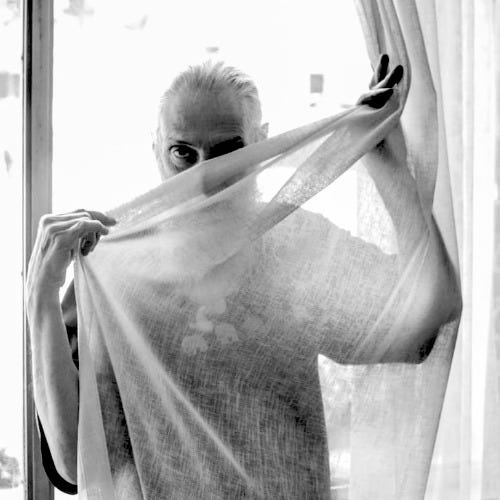
The poem suggests that life and light exist not outside lovers but between them. They circulate through bodies that continually offer themselves to one another, creating a shared space where affection, vulnerability and longing coexist. Yet Merchant also understands that love is never free from hunger. Lovers are drawn towards each other with such intensity that they almost consume one another emotionally and spiritually. This metaphorical devouring is not an act of destruction but of mutual transformation. To love deeply is to allow another person to reshape one's inner world, even at the risk of losing a fixed sense of self. Merchant's treatment of desire, therefore, moves beyond physical fulfilment. Desire becomes a means of knowing the world and, more importantly, of knowing oneself. The beloved functions as both companion and mirror, reflecting possibilities of existence that remain inaccessible in solitude. Every embrace becomes an encounter with another consciousness, another history and another body through which the speaker begins to understand his own incompleteness. Love does not erase individuality, but it momentarily suspends its boundaries.
This is also why the poem refuses to oppose freedom and attachment. Merchant suggests that love is simultaneously a pause and a release. It interrupts the restless movement of life by offering a place of belonging, yet it also liberates the self from loneliness, fear and emotional isolation. Love becomes a moment of stillness without becoming imprisonment. It allows the individual to stop searching while opening entirely new ways of experiencing the world. The title itself carries this expansive vision. To say that The Body is the World is to reject every hierarchy that places spirit above flesh or abstraction above lived experience. Merchant insists that the body is where history, memory, identity, suffering and joy converge. It is through the body that we love, grieve, remember and imagine. Every emotion ultimately returns to this physical existence, making the body not merely a vessel for life but life's most complete expression.
The poem and the book proposes that the deepest purpose of love is neither possession nor permanence, but transformation. What else can lovers do except discover in one another both a resting place and a new beginning? Merchant answers this question with characteristic tenderness. Love becomes a pause in the world's relentless movement, yet it is also the force that sets us free from the confines of our isolated selves. In recognising the body as the world, he reminds us that intimacy is not an escape from existence but one of its most profound ways of inhabiting it. This is precisely why The Body is the World: Selected Poems (1973-2025) is a landmark addition to Indian English poetry. Spanning five decades, the collection showcases Hoshang Merchant's unwavering commitment to writing the body, desire, love, loneliness and mortality with a rare fearlessness and lyricism. Long before such conversations became central to literary discourse, Merchant was expanding the possibilities of Indian poetry through his unapologetically queer, sensual and deeply philosophical voice. Despite his immense influence and devoted cult readership, he remains one of the most underrated poets of our time. This volume is not merely a retrospective but a powerful reminder that Merchant deserves to be recognised among the finest voices in Indian literature, capable of jolting a complacent poetic landscape with the force and originality his work has always possessed.